
Guiding Philosophy
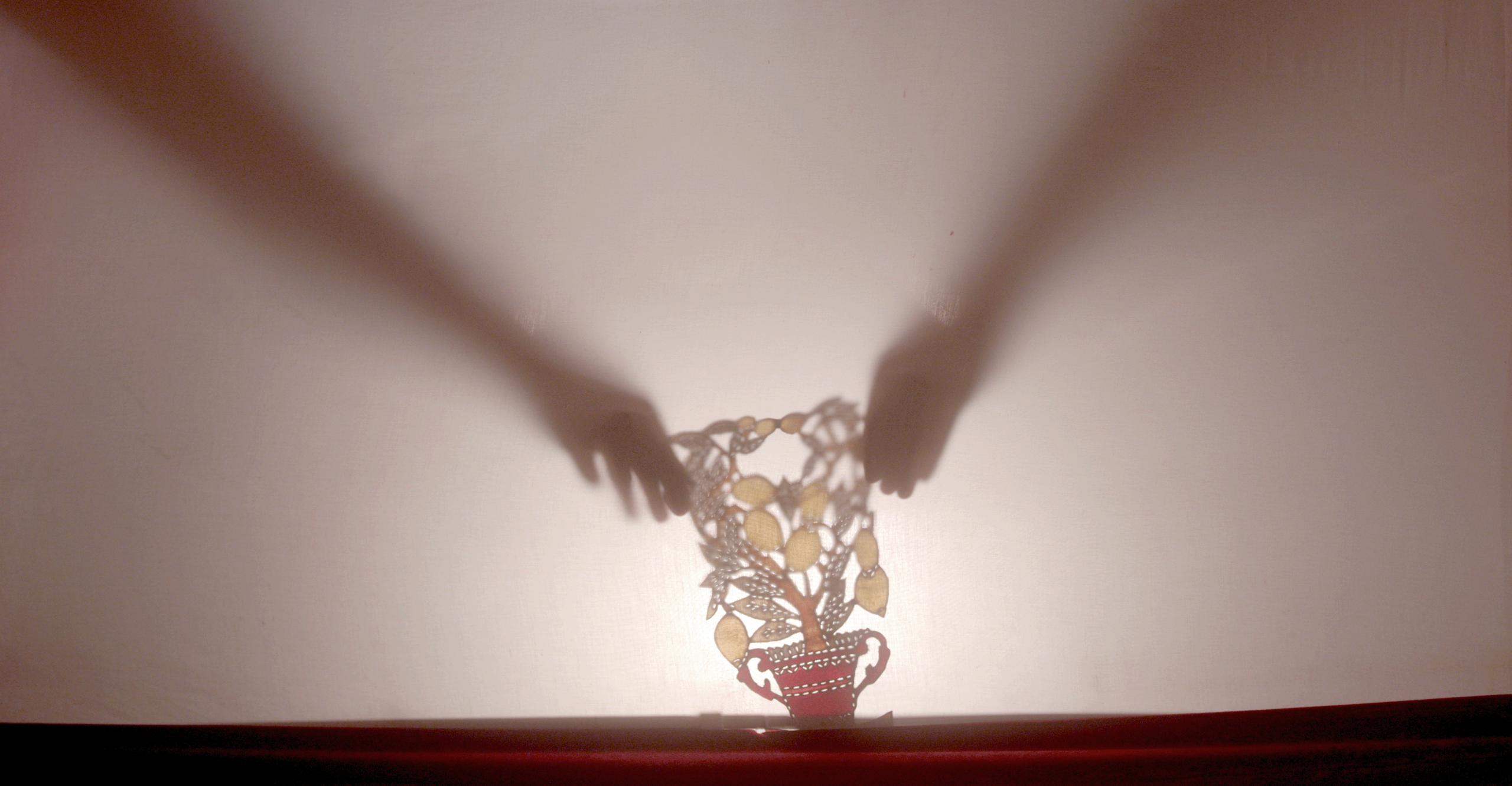
At the multidisciplinary heart of Hakawati’s mission—turning memory into meaning, heritage into healing—live the 120-year-old Karagöz puppets carried by hakawati/storyteller Abkar Knadjian from Urfa to Aleppo, hidden through genocide and war, and rediscovered by his great-great-granddaughter Sona Tatoyan.
These are not relics. They are refugees. Like millions, they crossed borders carrying stories. Place them before a lamp, give them a nudge, and they come alive—their shadows moving as witnesses, teachers, luminous guides. Their very existence reminds us that light and shadow co-exist, each giving shape to the other.
Hakawati draws a deliberate parallel.
We all know flight. We flee the raw edges of experience—into work, food, screens, achievement—exiling ourselves from our own lives. But turning away from darkness only deepens it. What we face begins to transform.
True refuge is found not in escape, but in turning toward the shadow. When we meet what we’ve avoided, we discover its impermanent nature. When we pause, stay present, and see clearly that light and shadow belong to each other, we rediscover an inner ground no circumstance can shake.
The puppets embody this truth. They show us that illumination is not the absence of darkness but its companion. When we bring awareness to what we once exiled, darkness becomes a doorway home—to our histories, our bodies, our truths, and one another. And we begin to be free.
Hakawati invites a double witnessing:
- A people’s journey through violence, creativity, and survival
- Your own inner landscape—where attention alchemizes shadow into meaning, suffering into clarity, and displacement into home